Manufacturing
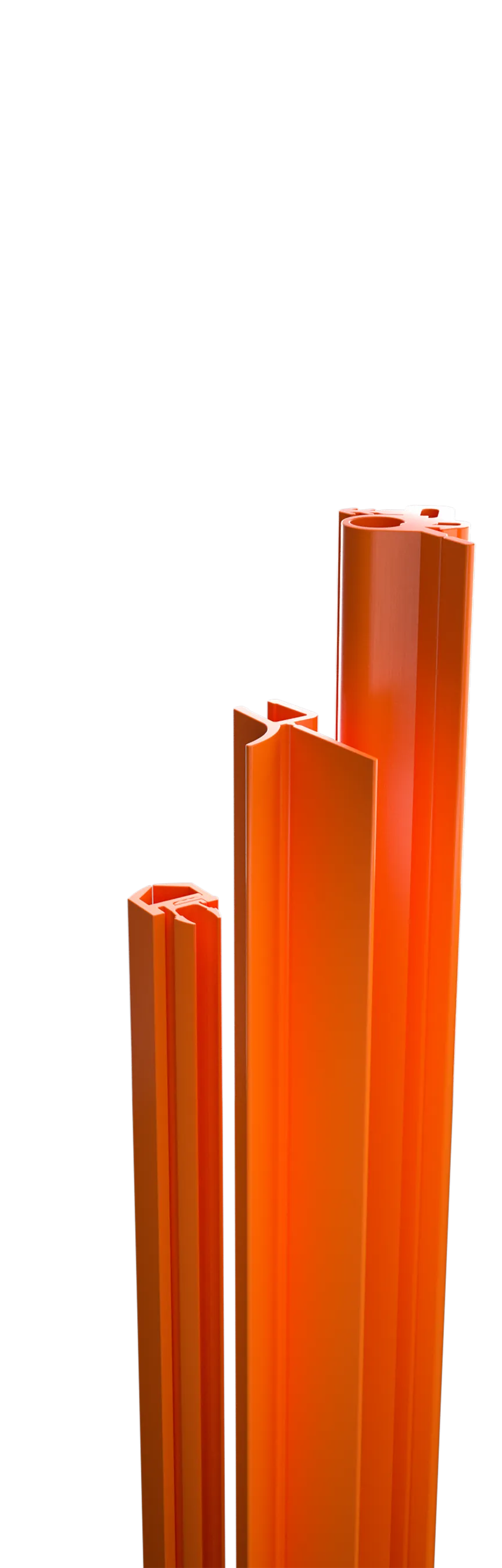
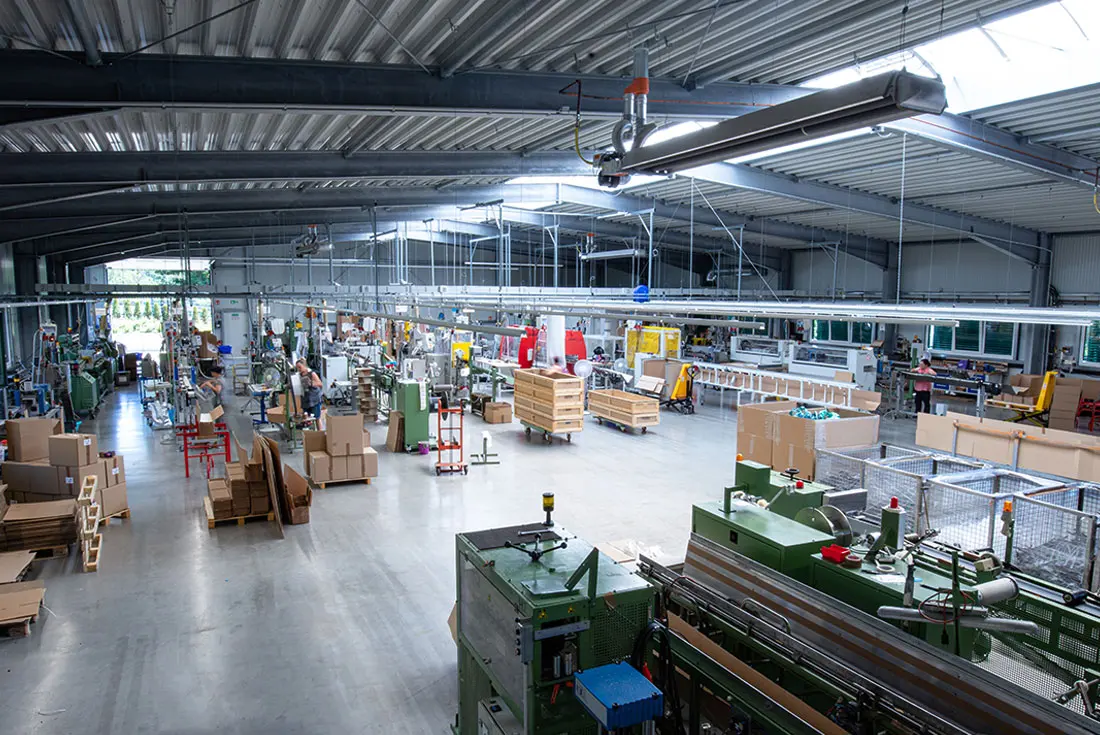
Profile extrusion at Heller Kunststoffe means: consulting and design, production on 20 extrusion lines with 11 materials from PVC-U to TPU, DEKRA-certified quality to DIN EN ISO 9001:2015 and a fabrication department that delivers ready-to-install components. All at one site in Herborn, Germany, small series welcome.
Consulting and design
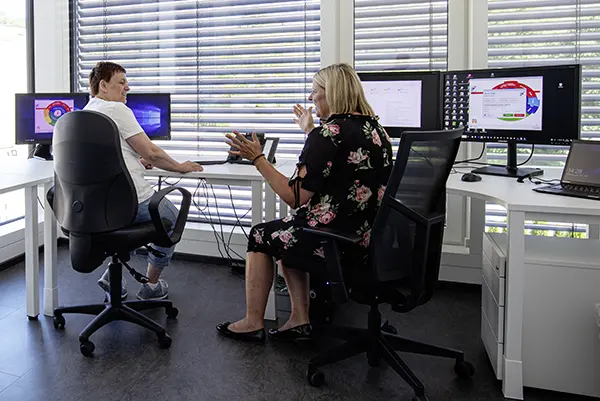
We enjoy solving complicated customer requirements. Often only the function and the installation situation are known at the start: based on samples, sketches or drawings we shape your product. Our own design department, combined with in-house toolmaking, makes that possible.
For a tangible discussion before the first tool is cut, prototypes come from our own 3D printer: geometry and installation are debated on a real part, not on a screen.
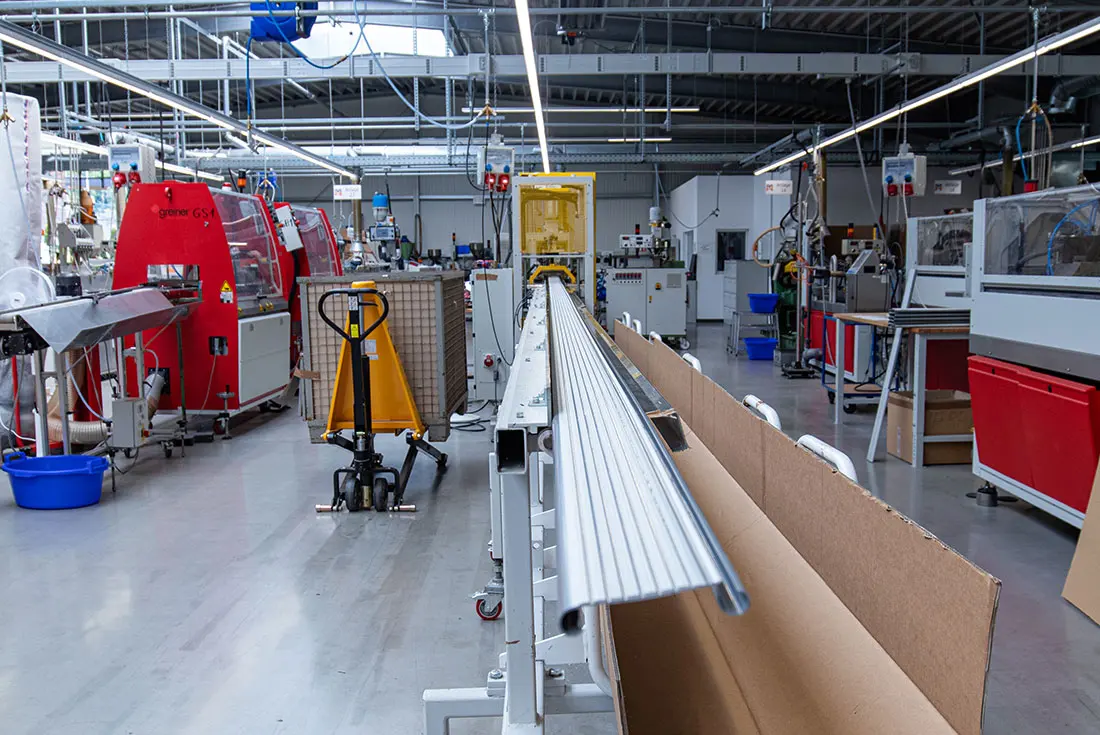
20 lines. 11 materials.
On 20 extrusion lines in various sizes we process plastics into profiles, hoses and round cords: in small batches as well as running series.
The right material for your application
Eleven materials belong to our documented processing range. The matrix provides orientation; the final selection is made together, based on your requirements for hardness, temperature, media and weathering.
| Material | Character | Hardness (typical) | Temperature (continuous, approx.) | Particularly suited for |
|---|---|---|---|---|
| PVC-U | rigid, stiff, flame-retardant, economical | rigid | -15 to +60 °C | window, construction and clamping profiles, cable ducts |
| PVC-P | flexible, widely adjustable | 25–90 Shore A | up to +60 °C | sealing lips, edge protection, soft component in co-extrusion |
| PP | light, stiff, chemically resistant | rigid | 0 to +100 °C | technical profiles, living hinges, equipment building |
| ABS | impact-resistant with premium visible surfaces | rigid | -40 to +85 °C | furniture, housing and visible profiles |
| HD-PE | tough, low-friction, chemically resistant | rigid, tough | -40 to +80 °C | slide strips, guides, wear profiles |
| LD-PE | soft-flexible, tough | soft, pliable | -40 to +60 °C | flexible protection and edge profiles |
| PA | strong, abrasion-resistant, low-friction | rigid | -40 to +85 °C | slide and guide profiles, wear strips |
| TPU | elastic, extremely abrasion-resistant | 60 Shore A to 80 Shore D | -40 to +120 °C | wipers, damping profiles, hoses |
| TPV | rubber-like, permanently elastic sealing | 40 Shore A to 70 Shore D | -60 to +135 °C | window, door and equipment seals |
| TPS | very soft to medium-hard, soft touch | 30 Shore 00 to 60 Shore D | up to +80 °C | sealing lips, grip zones, co-extrusion on ABS |
| EVA | highly flexible, cold-impact-resistant, damping | soft | cold-flexible, type-dependent | damping and anti-slip profiles |
Orientation values from material engineering sources (documentation: research/FACHWISSEN-EXTRUSION.md); temperature and hardness figures vary by grade and compound. The application-specific design in the project is binding.
Fixed lengths or rolls?
Cut to size for your assembly
Rigid profiles are delivered precisely cut, with mitre cuts, punching or drilling on request. Ideal when the profile is installed without further cutting: no waste, no saw in your line.
Endless for your processing
Flexible profiles, hoses and round cords are wound on rolls: space-saving in storage and logistics, economical for continuous processing and your own fabrication.
The fabricated component
The third way: we take over fabrication completely, from adhesive tape to welded frames. You receive a ready-to-install component. Straight to the fabrication chapter
Two hardnesses in one profile
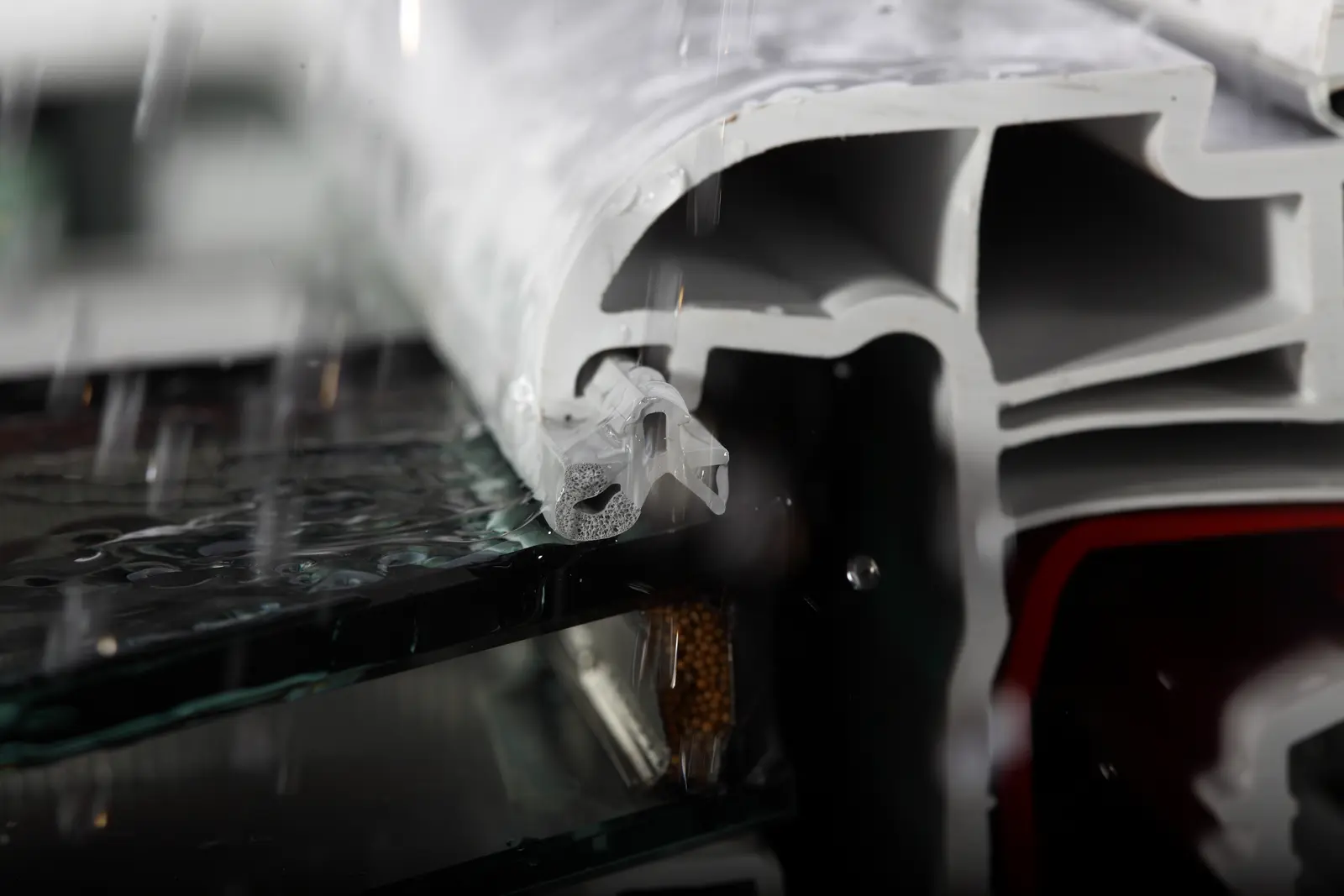
Co-extrusion is a process in which two material settings are joined into one profile in a single pass: typically a rigid, shape-giving carrier and a soft, sealing or damping component. The result is a part that mounts like a rigid profile and seals like a rubber lip.
Besides the common extrusion types and this dual-hardness combination, we offer the processing of special materials. Five documented treatments:
-
UV
UV-protected
For sun-exposed applications: stabilised against yellowing and embrittlement.
-
FUNGICIDE
Fungicide-treated
Counteracts mould growth, for example in permanently humid wet rooms.
-
SLIP
Slip coating
Reduces friction on moving contact surfaces and eases assembly.
-
UL 94 V-0
UL 94 V-0 listed
Materials with recognised flammability classification for electrical applications.
-
ESD
Antistatic
Dissipates charges: for electronics environments and sensitive processes.
Audited, not asserted
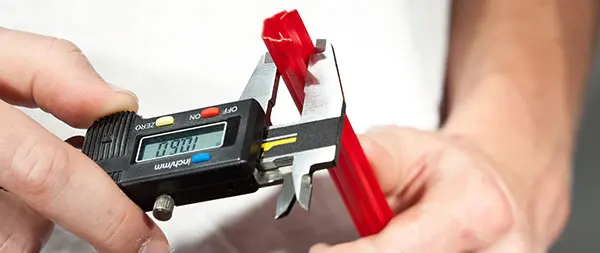
The precision and quality of our products in the field of "manufacture of plastic products by extrusion with in-house toolmaking" is certified by DEKRA Certification GmbH to DIN EN ISO 9001:2015 and subject to an annual surveillance audit.
Added to that: AEO status for secure customs processes in export and the CrefoZert for audited creditworthiness. Three independent confirmations that you can rely on this supplier.
Through to the ready-to-install component
To make a profile meet its requirements, we fabricate it to your wishes: eight documented techniques in-house, including an internal welding shop.
-
 01
01
Punching
Assembly and function openings placed precisely, repeatable across the whole series.
-
 02
02
Drilling
Defined hole patterns for screwing and fixing, set to your drawing.
-
03
Printing
Marking, logo or dimensions printed directly on the profile: durable and precisely positioned.
-
 04
04
Adhesive and hook-and-loop tapes
Self-adhesive: the profile is ready for assembly in seconds.
-
05
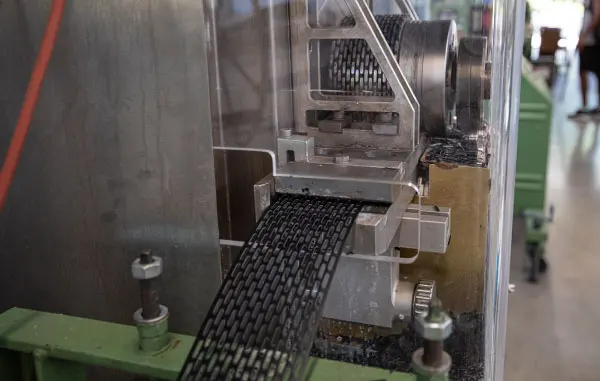
Stretch protection
Secures flexible profiles against elongation during installation and operation.
-
 06
06
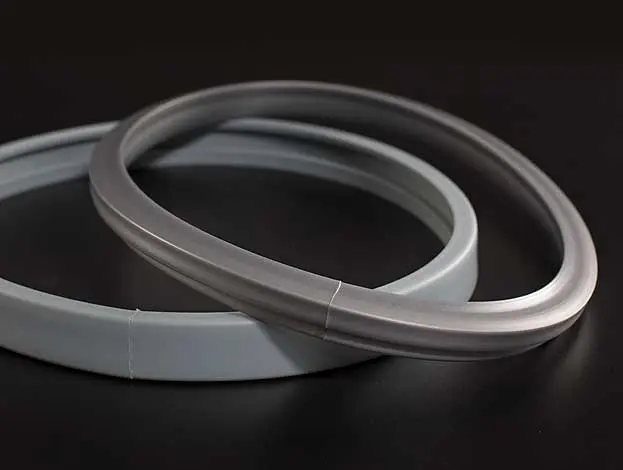
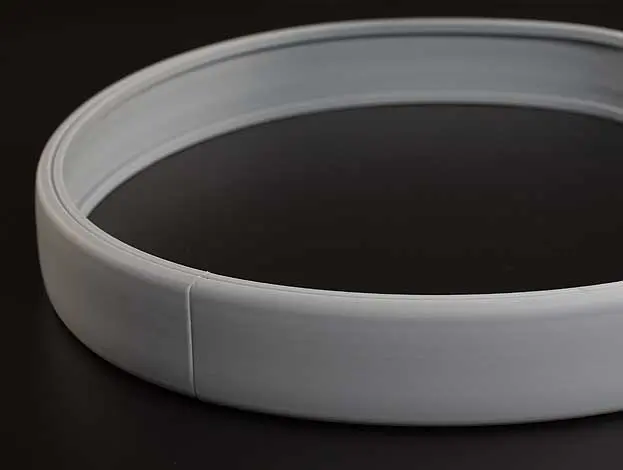
Welded rings and frames
Our internal welding shop joins profiles into closed rings or frames: tight in the corners.
-
07
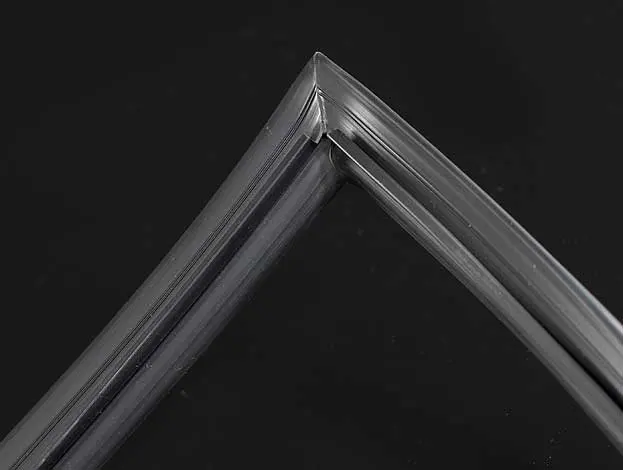
Mitre cuts
Angle-precise cuts for clean corner joints, straight from the factory.
-
08
Brush insertion
Brushes drawn directly into the profile: complete sealing and wiping solutions from one source.
Frequently asked questions
From which quantity does a custom profile pay off?
Earlier than many expect: we also manufacture in very small quantities. Economics depend mainly on the tool; the cost drivers are explained in our article on tooling costs. We will give you concrete figures after a quick look at your geometry.
Which tolerances are possible for extruded profiles?
The basis are the general tolerances of DIN 16941 for extruded profiles made of thermoplastics; achievable values depend on geometry, material and wall thickness. Critical dimensions are agreed during sampling.
Does Heller advise on material selection?
Yes, it is part of every project: we advise on the selection of suitable materials, also from the perspective of sustainability and climate impact. The material matrix on this page is the starting point.
How are profiles delivered: fixed lengths or rolls?
Both. Rigid profiles are delivered in fixed lengths, flexible profiles on rolls if preferred; fabricated components arrive ready to install.
Which special materials does Heller process?
Beyond the standard range we process special materials with these documented properties: UV-protected, fungicide-treated, slip-coated, UL 94 V-0 listed and antistatically treated.
Your profile starts with a sketch.
Send us a drawing, a sample or simply the installation situation. We will get back to you with an initial technical assessment.
Family-run since 1979 · DIN EN ISO 9001:2015 · AEO